For property managers and HOA maintenance teams, a utility box usually looks like a routine part of the property.
Water meters need to be read. Irrigation valves need adjustment. Electrical equipment needs inspection. Landscape crews work around ground-level boxes every day.
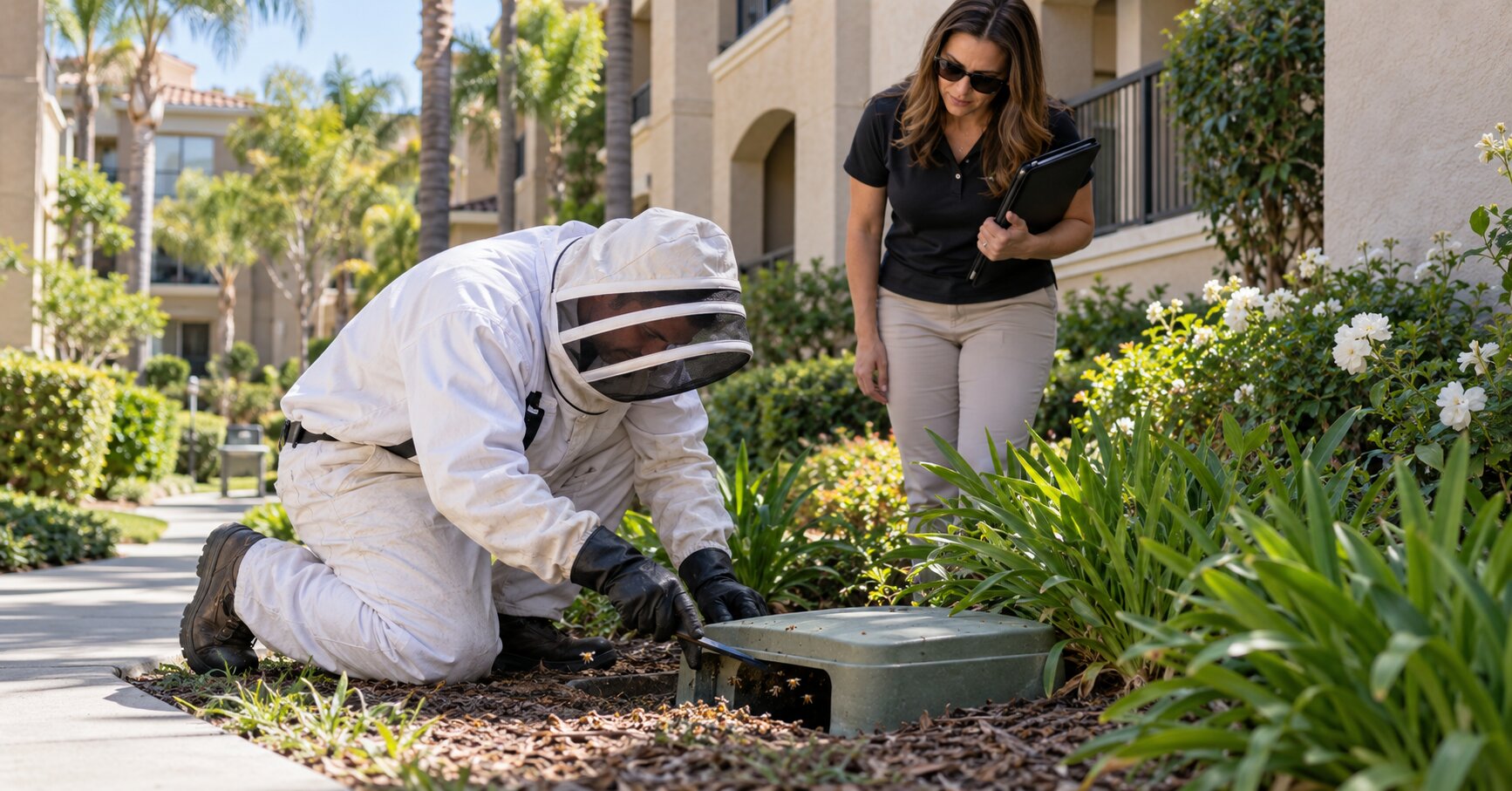
Then someone lifts a lid and discovers that bees—or another stinging insect—have been using the enclosure.
That can quickly turn an ordinary maintenance task into a safety issue.
Honeybees may investigate or establish colonies inside protected utility areas, while wasps and yellow jackets can also use ground-level boxes, equipment enclosures, or nearby structural openings. The insects are not always obvious from several feet away.
For HOAs and property managers, the key is recognizing the warning signs before maintenance personnel open, reach into, or disturb the enclosure.
Why Utility Areas Can Attract Bees
Honeybees naturally search for protected cavities.
Around managed properties, potential locations can include:
- Water meter boxes
- Irrigation valve boxes
- Electrical equipment areas
- Utility cabinets
- Pool equipment enclosures
- Conduit penetrations
- Exterior wall openings
- Landscape control boxes
- Voids around utility pipes
- Equipment housings
The entrance does not have to be large.
A small gap beneath a utility-box lid or around a conduit penetration may provide access to a larger protected space underneath or behind it.
That means what looks like a few bees around landscaping may actually be regular traffic to and from a concealed colony.
The Warning Sign Maintenance Teams Should Not Ignore
One bee flying around a utility box does not necessarily mean there is a hive.
Repeated traffic is different.
Before opening a meter box or equipment enclosure, maintenance personnel should watch for bees that:
- Repeatedly enter beneath the same lid
- Disappear into the same conduit opening
- Fly into a crack around an exterior panel
- Arrive and leave continuously
- Follow the same flight path throughout the day
- Become concentrated around one small area
If several insects are repeatedly entering the same opening, the safest approach is to stop and determine what is happening before disturbing the enclosure.
Water Meter and Irrigation Boxes Can Hide More Than Plumbing
Ground-level utility boxes are particularly easy to overlook.
Landscape crews may work beside them every week without realizing insects are using the enclosure.
A problem may only be discovered when someone:
- Lifts the meter lid
- Adjusts an irrigation valve
- Repairs a sprinkler system
- Clears mulch or landscaping
- Reads a meter
- Performs seasonal maintenance
If bees are living immediately beneath the cover, lifting that lid can put the worker extremely close to the colony.
For that reason, maintenance crews should not open a utility box when they can already see organized bee traffic entering underneath it.
The Bee Man has more information about professional bee removal from water meters, electrical boxes, and utility enclosures in Orange County.
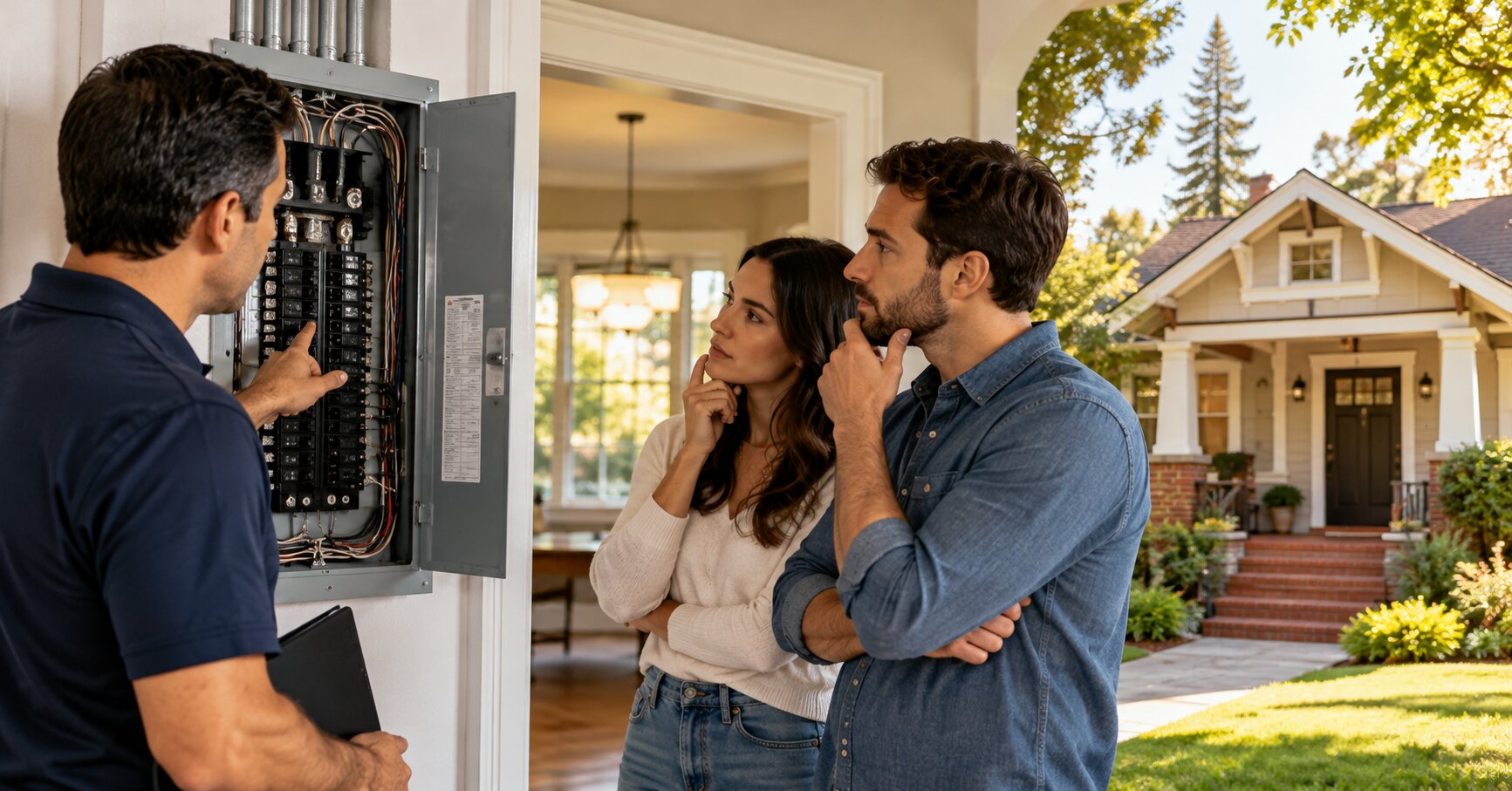
Electrical Enclosures Require Extra Caution
Bee activity around electrical equipment creates two separate concerns.
There is the stinging-insect problem.
There is also the electrical equipment itself.
Property managers should avoid having unqualified employees open electrical panels simply to determine whether bees are inside.
Sometimes the insects are not actually nesting inside the energized equipment. They may instead be entering through a gap around conduit, a wall penetration, or a space behind the enclosure.
That distinction matters.
If access to energized equipment is required, the bee-removal professional may need to coordinate with an electrician, maintenance department, or utility provider.
Insiders Business has previously discussed electrical upgrades businesses should consider, and one of the broader lessons applies here as well: electrical infrastructure should be handled as building infrastructure—not casually opened during unrelated maintenance work.
The Hive May Not Be Inside the Box
One of the easiest mistakes is assuming that the place where bees disappear is the location of the entire hive.
It may only be the entrance.
Bees could enter beside a utility cabinet and then move into:
- A wall cavity
- Structural framing
- A soffit
- An attic
- A roof cavity
- A utility chase
The honeycomb could be several feet away from the visible opening.
This is why sealing the opening or treating only the visible insects may not solve the underlying problem.
Professional bee removal Orange County work should focus on determining where the active colony is located before deciding what type of access or removal is appropriate.
Do Not Seal a Utility Opening While Bees Are Active
Maintenance crews are trained to repair gaps.
Normally, that is a good thing.
But a bee entrance is one situation where immediately filling the hole can create a bigger problem.
If an active colony is behind the opening, sealing its normal entrance does not remove the bees.
They may begin searching for another route through the structure.
Depending on the building, that could lead toward:
- Utility rooms
- Attics
- Interior wall spaces
- Garages
- Ceiling penetrations
- Residential units
- Commercial tenant spaces
The proper sequence is usually to address the colony first and evaluate exclusion afterward.
Bee Removal and Electrical Repair May Require Different Professionals
Property managers should think of these situations as a coordination issue.
The bee-removal company handles the insect problem.
An electrician may be responsible for electrical equipment.
A utility provider may control access to certain meters or infrastructure.
A maintenance contractor may handle the final wall, cabinet, stucco, or enclosure repair.
This does not mean every utility-box hive requires four different contractors.
It means the property manager should avoid assuming that one company should perform work outside its area of expertise.
Insiders Business has also discussed how electrical contractors can provide specialized solutions. When bees are near electrical equipment, that same principle of using the appropriate qualified trade becomes especially important.
Older Properties May Have More Places for Insects to Enter
Age does not automatically mean a property will have bee problems.
However, older buildings may accumulate changes over time:
- Previous repairs
- Aging conduit seals
- Damaged stucco
- Gaps around utility penetrations
- Replaced equipment
- Deteriorated trim
- Added plumbing or electrical lines
Each modification can potentially create small exterior openings.
Property managers overseeing older condo, apartment, or commercial properties should pay attention to these areas during routine inspections.
Insiders Business recently covered electrical problems worth checking in older properties. Although that article focuses on homebuyers, the larger maintenance principle is relevant to managed properties as well: older electrical and structural components deserve regular attention.
What If Honeycomb Is Left Behind?
Getting the live bees out may not be the end of the job.
An established colony can leave behind:
- Honeycomb
- Honey
- Wax
- Pollen
- Propolis
- Brood material
- Other hive debris
Depending on the location, remaining material can contribute to odors, staining, honey leakage, ant activity, wax moth activity, or continued interest from scout bees.
If the colony extended from a utility penetration into a wall or structural cavity, additional cleanup may be appropriate.
Property managers can learn more about honeycomb removal and structural cleanup in Orange County.
Not Every Utility-Box Problem Is a Honeybee Colony
Identification matters.
Wasps and yellow jackets may also use protected cavities or ground-level locations around managed properties.
A maintenance employee should not assume every yellow-and-black insect is a honeybee.
That matters because bee and wasp removal strategies may differ depending on the insect involved and where the nest is located.
Yellow jackets can be particularly concerning around ground-level areas because workers may unknowingly approach or disturb the nest during landscaping or utility work.
If the insect cannot be safely identified from a distance, the enclosure should be left alone until it can be evaluated.
Pool Equipment Areas Deserve Attention Too
Many HOA and apartment properties have shared swimming pools.
Those areas often contain:
- Pumps
- Electrical equipment
- Plumbing
- Utility cabinets
- Irrigation controls
- Landscaping
- Exterior storage areas
The combination of water and protected equipment spaces can make pool areas important places to watch for bee activity.
If bees are collecting water from the pool and then repeatedly flying toward an equipment enclosure or nearby building, their flight pattern may help reveal where the colony is located.
For residential and managed properties dealing with this issue, The Bee Man also provides information about bee control around swimming pools, fountains, and outdoor water sources in Orange County.
What Property Managers Should Tell Maintenance Teams
The goal is not to make staff afraid of every bee they see.
It is to establish a simple procedure when repeated activity is discovered.
Before opening a suspicious utility enclosure, staff should:
- Observe from a safe distance.
Determine whether insects are repeatedly entering one location. - Identify the affected equipment.
Is it a water meter, irrigation box, electrical enclosure, conduit opening, or another utility area? - Do not disturb the enclosure.
Avoid lifting lids or removing covers when active traffic is visible. - Do not seal the entrance.
The colony should be addressed before exclusion. - Photograph the location from a safe position.
This can help property management document exactly where the activity is occurring. - Determine who controls the equipment.
Some utility infrastructure may belong to a utility provider rather than the HOA or property owner. - Arrange the appropriate inspection.
Bee removal, electrical work, utility access, and final repairs may require different qualified professionals.
Documentation Can Prevent Repeat Problems
For an HOA or property-management company, documentation is valuable.
Record:
- The location of the activity
- The affected building or unit
- The type of utility enclosure
- Where insects were entering
- Whether the colony extended into the structure
- Whether honeycomb was removed
- Whether temporary repairs were made
- What permanent repair remains
- Whether the entry point was properly excluded
Photos before and after the work can be particularly useful.
If bees return months or years later, the maintenance team has a record showing exactly what happened at that location.
Bee Exclusion Should Happen at the Right Time
After the active colony has been removed and any necessary cleanup completed, the entry point can be evaluated.
Appropriate bee-proofing may involve addressing openings around:
- Conduit
- Plumbing
- Exterior wall penetrations
- Cabinet edges
- Utility chases
- Trim
- Previous hive entrances
However, building systems must still function properly.
Electrical equipment may need ventilation or required clearances. Utility boxes need to remain accessible. Drainage and other structural functions should not be compromised simply to close a gap.
Professional bee-proofing services in Orange County should focus on appropriate exclusion rather than indiscriminately sealing every opening.
Utility-Box Bee Problems Are Really a Property-Management Issue
A hidden hive inside or behind a utility enclosure is more than a pest-control problem.
It can involve safety, maintenance coordination, access, electrical infrastructure, structural repairs, landscaping, tenant communication, and documentation.
That is why HOAs and property managers benefit from having a clear response procedure before an employee unexpectedly opens the wrong box.
The most important rule is simple:
If insects are repeatedly entering a utility enclosure, stop before disturbing it.
Determine what is inside first.
The Bee Man has served Orange County since 1977 and provides professional commercial bee, wasp, and yellow jacket removal in Orange County for HOAs, property managers, commercial properties, and other managed locations in the communities it serves.
For help with bees in water meters, utility boxes, electrical enclosure areas, walls, or other structural locations, contact The Bee Man at (949) 455-0123.