A clean waiting room is only the beginning. The little details patients notice can say a lot about how a medical practice is managed.
Think about the last time you walked into a medical office.
Before you spoke with the receptionist, filled out paperwork, or met your doctor, you probably noticed a few things.
Was the waiting room comfortable? Did the place smell fresh? Were the floors clean? Did the reception area look organized?
You might not have consciously evaluated every detail, but you formed an impression.
Patients do the same thing every day.
Medical practices spend considerable time and money on patient care, technology, staffing, and creating efficient operations. Yet one of the simplest parts of the patient experience can sometimes receive less attention than it deserves: the physical environment.
And here’s the interesting part.
A medical office doesn’t have to look dirty to have cleaning problems worth addressing.
Sometimes the details that matter most are the ones everyone working in the building has stopped noticing.
The Patient Experience Begins Before the Appointment
Healthcare providers naturally focus on delivering quality medical care.
Patients, however, experience much more than the actual appointment.
Their visit begins in the parking lot, continues through the entrance, and includes the reception area, waiting room, hallways, restrooms, and consultation spaces.
Each environment contributes to the overall experience.
A welcoming reception area can make a stressful appointment feel a little more comfortable.
A neglected waiting room can create the opposite impression.
This doesn’t mean patients automatically judge medical expertise based on whether a floor is polished. But the condition of a facility can influence how organized, attentive, and professional the practice appears.
And first impressions can be difficult to change.
A clean environment also contributes to how comfortable people feel during their visit. This is particularly relevant in healthcare settings, where patients may already be dealing with stress or uncertainty.
As discussed in this article about how cleaning services in St. Petersburg can support healthier environments, consistent attention to cleaning is an important part of maintaining welcoming spaces for the people who use them.
Five Areas Patients Notice More Than You Think
1. Waiting Room Chairs and Seating Areas
Waiting rooms experience constant activity.
Patients sit down, stand up, move chairs, place bags on the floor, and sometimes arrive with family members or children.
Over time, seating areas can collect dust, crumbs, spots, and everyday debris.
Fabric chairs may also develop visible wear or discoloration.
What makes this especially easy to overlook is familiarity.
Employees see the same waiting room every day. Gradual changes in appearance may become almost invisible to them.
A patient visiting for the first time sees everything with fresh eyes.
Periodically examining seating areas from a visitor’s perspective can reveal details that routine cleaning may miss.
2. Floors and Entryways
Florida medical offices have an interesting challenge.
Patients don’t arrive from a perfectly controlled environment.
They walk in from parking lots, sidewalks, rainstorms, and humid outdoor conditions.
Shoes bring in sand, moisture, dirt, and debris.
The result?
Entryways and high-traffic flooring can begin looking worn or neglected even when the rest of the office appears clean.
Carpeted areas may develop darker traffic lanes. Tile and grout can accumulate visible soil. Entrance mats may stop looking presentable long before someone thinks to replace or professionally clean them.
These are not necessarily signs of poor management.
They’re signs that flooring needs a maintenance schedule based on actual use.
For medical offices in St. Petersburg and the surrounding Tampa Bay area, routine floor care can be particularly important during rainy periods and busy seasons.
3. Restrooms
If there’s one area that can quickly affect someone’s impression of a medical office, it’s the restroom.
Patients notice obvious problems.
An overflowing trash container.
An empty soap dispenser.
Water spots around a sink.
Paper towels scattered on the floor.
An unpleasant odor.
Restrooms are also areas where small issues can develop between scheduled cleaning visits.
For busy practices, it may make sense to establish periodic restroom checks throughout the day in addition to regular professional cleaning.
The goal isn’t simply to make the restroom look good first thing in the morning.
It’s to maintain a consistent standard as people use it.
4. Reception Counters and Frequently Touched Surfaces
Reception desks are busy places.
Patients check in, complete forms, ask questions, make payments, and interact with staff.
Throughout the day, counters can accumulate fingerprints, dust, smudges, and everyday clutter.
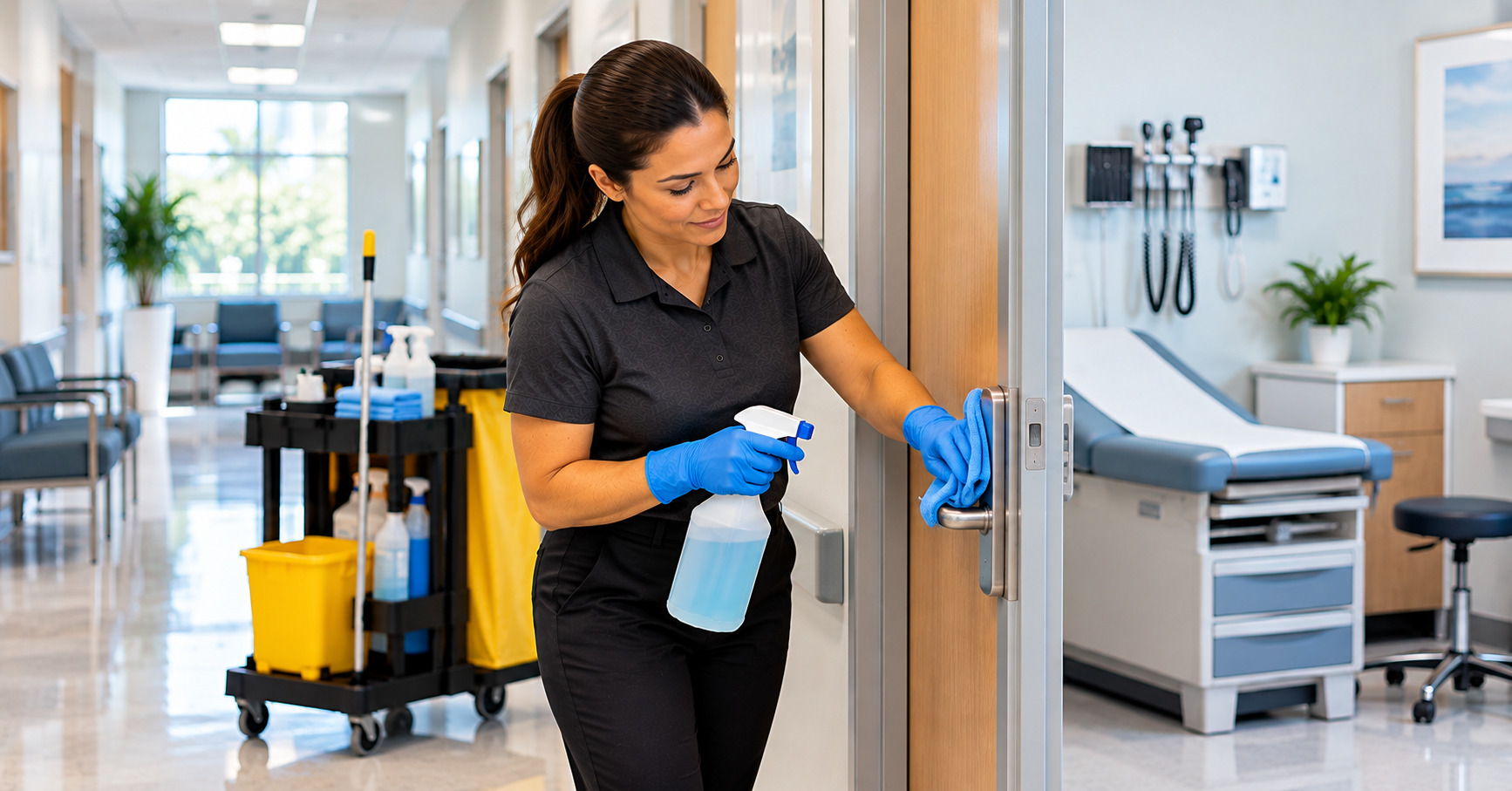
Door handles, accessible counters, and other frequently touched surfaces also deserve attention.
Medical facilities should follow appropriate cleaning and disinfection procedures based on their established protocols.
But even from a purely visual standpoint, maintaining these areas makes a difference.
A tidy, well-maintained reception area helps create a more organized and welcoming experience.
5. Odors and Overall Freshness
Not every cleaning concern is something patients can see.
Sometimes they notice how a building smells.
A lingering odor near a restroom, damp carpeting, or an unpleasant smell in a waiting area can change the experience of entering a facility.
In Florida, humidity can add another complication.
Moisture may contribute to musty conditions when building ventilation, leaks, or cleaning-related moisture are not properly managed.
Covering an odor with fragrance isn’t the same as addressing its source.
Facility managers should investigate recurring odors and identify whether cleaning, maintenance, ventilation, or another building issue needs attention.
A clean medical office should feel comfortable without relying on overpowering scents.
Why Looking Clean and Staying Clean Are Different Things
Here’s a situation many business owners recognize.
A facility looks excellent immediately after a deep cleaning.
The carpets are refreshed.
The floors shine.
The restrooms look great.
The waiting room feels inviting.
Then daily operations resume.
Patients arrive.
Employees move between rooms.
Trash accumulates.
Moisture gets tracked inside.
Furniture is used.
Gradually, the building begins returning to its previous condition.
This is why occasional deep cleaning and ongoing maintenance serve different purposes.
Deep cleaning addresses accumulated soil and areas requiring additional attention.
Routine cleaning helps maintain the environment between those larger projects.
The strongest facility maintenance programs use both.
They don’t wait until the building looks noticeably neglected before taking action.
This approach applies to all types of commercial properties. As discussed in why commercial cleaning matters in St. Petersburg, maintaining a business environment requires ongoing attention rather than occasional cleaning when problems become visible.
Florida Medical Offices Face Unique Maintenance Challenges
Medical facilities in St. Petersburg, Tampa, Largo, and surrounding communities operate in a climate that presents ongoing maintenance challenges.
Florida’s humidity, frequent rain, sand, and year-round activity can affect the condition of commercial buildings.
Consider a typical rainy afternoon.
Patients arrive carrying umbrellas.
Shoes bring moisture through the entrance.
Waiting room traffic increases.
Floors that looked clean earlier in the day may require additional attention.
Over time, repeated exposure to moisture and tracked-in debris can affect carpets, mats, grout, and other flooring materials.
This is one reason cleaning schedules should be flexible enough to reflect local conditions.
A medical office may need additional entrance maintenance during wet weather or more frequent carpet attention in heavily traveled areas.
The goal is to respond to how the building is actually being used rather than following a schedule that never changes.
Preventive Cleaning Is Also a Business Decision
Medical office cleaning is often treated as a routine operating expense.
But there’s another way to think about it.
Your facility is an investment.
Flooring, furniture, countertops, and other surfaces represent money the practice has already spent.
Allowing dirt, residue, and moisture to accumulate can make these materials more difficult to maintain.
Preventive cleaning helps address routine buildup before it becomes a larger maintenance concern.
For example, periodically cleaning commercial carpeting may help maintain its appearance and remove accumulated soil.
Maintaining tile and grout can reduce visible buildup in heavily used areas.
Regular attention to reception furniture and common spaces helps keep them presentable.
These efforts won’t eliminate every repair or replacement expense.
But they can contribute to a more thoughtful approach to managing the property.
What Medical Office Managers Should Look for in a Cleaning Provider
Choosing a cleaning company for a medical office involves more than comparing hourly rates.
A practice manager should understand exactly what services are included, how frequently cleaning will occur, and how the provider will coordinate with the facility’s operations.
Some useful questions include:
- Does the company have experience with commercial cleaning?
- Can the cleaning schedule accommodate patient appointments and operating hours?
- Which areas and surfaces are included in the service agreement?
- How are special cleaning requests handled?
- What carpet and floor-care services are available?
- How will cleaning quality and communication be managed?
- Are responsibilities for clinical areas clearly defined?
Medical offices also need to distinguish between general environmental cleaning and specialized clinical cleaning or disinfection responsibilities.
Those expectations should be established before service begins.
Finding a dependable cleaning provider is an important decision for any business, but medical offices have additional considerations because of their patient-facing environments and operational requirements.
Understanding what to look for when choosing a cleaning company can help facility managers evaluate reliability, service expectations, communication, and the overall fit for their property.
For practices exploring medical office cleaning services in St. Petersburg, FL, Dirt Busters provides information about commercial cleaning options for healthcare offices, waiting rooms, flooring, and other professional spaces.
The important thing is finding a cleaning arrangement that reflects the facility’s actual needs.
A Simple Five-Minute Walkthrough Can Reveal a Lot
One of the easiest ways for a medical office manager to evaluate the facility is to walk through it as though visiting for the first time.
Start outside the entrance.
Look at the doors and entry mats.
Walk into the waiting room.
Sit in one of the chairs.
Look toward the reception counter.
Check the floors and corners.
Visit the restroom.
Walk through the hallways.
Ask yourself a few simple questions.
What looks well maintained?
What feels overlooked?
Are there areas that need more frequent attention?
Does the facility look as welcoming at 3 p.m. as it does at 8 a.m.?
This short exercise can help identify opportunities for improvement before patients begin mentioning them.
It can also make conversations with the cleaning provider more productive because management can point to specific areas requiring attention.
The Best Medical Offices Pay Attention to the Small Things
Most patients aren’t expecting a medical office to look like a luxury hotel.
They’re looking for competent care, a comfortable experience, and an environment that feels professional.
Cleanliness contributes to that experience.
Not through one dramatic cleaning project.
Not through an occasional perfectly polished floor.
But through the consistent attention given to waiting rooms, restrooms, reception areas, hallways, and other spaces patients use.
The most effective approach is often the simplest.
Notice the small problems.
Address them early.
Maintain a regular cleaning schedule.
And occasionally look at the building through the eyes of someone who has never been there before.
Because when it comes to the patient experience, the details people don’t mention may still be the details they remember.
About Dirt Busters
Dirt Busters provides residential and commercial cleaning services throughout St. Petersburg and the Tampa Bay area. The company offers office cleaning, janitorial services, carpet and upholstery cleaning, and floor-care solutions for local businesses and properties.
Learn more about Dirt Busters’ commercial cleaning services or call (727) 496-8779 to discuss your facility’s cleaning needs.