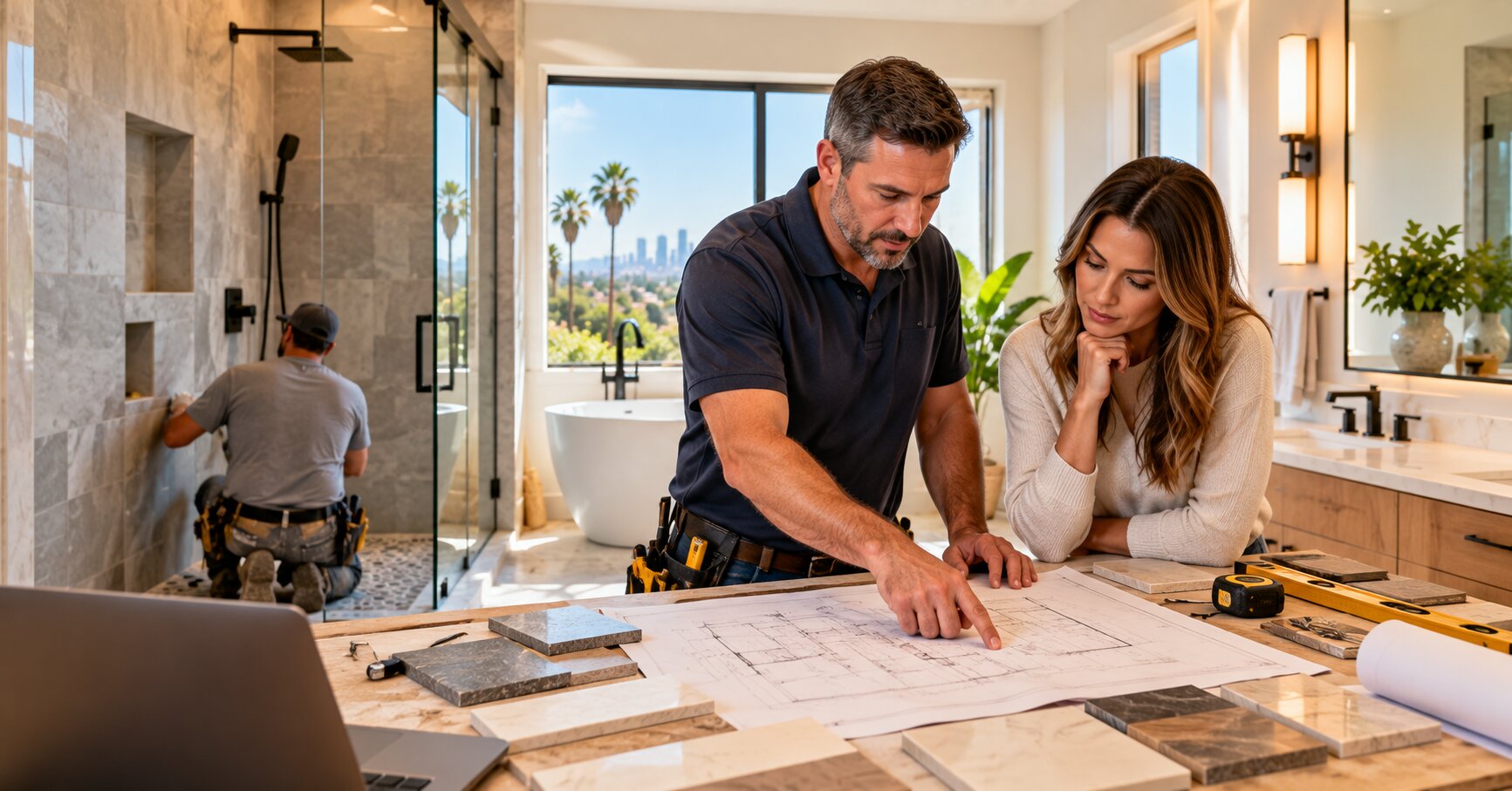
A bathroom remodel can look surprisingly simple in photographs. An outdated shower becomes a beautiful walk-in enclosure. Old tile is replaced with modern finishes. A new vanity, lighting, and fixtures completely change the appearance of the room.
But behind every successful bathroom renovation is something homeowners rarely see in the finished photographs: careful project management.
In Los Angeles, bathroom remodeling involves much more than choosing attractive materials and hiring skilled installers. Plumbing, waterproofing, electrical work, ventilation, inspections, material availability, and construction scheduling all need to work together.
Even a relatively small bathroom can involve multiple trades, specialized materials, and decisions that must be made in the correct order.
That’s why homeowners planning bathroom remodeling in Los Angeles should evaluate more than a contractor’s portfolio. Understanding how a remodeling company plans, coordinates, and manages construction can be just as important as the finished design.
1. Why Bathroom Remodeling Requires Careful Coordination
Bathrooms may be among the smallest rooms in a house, but they are also among the most technically demanding.
Unlike a living room renovation, bathroom remodeling involves multiple systems operating within a limited space.
A typical project may require coordination between demolition crews, plumbers, electricians, waterproofing specialists, tile installers, cabinet installers, painters, and other construction professionals.
Each stage depends on work completed during the previous stage.
For example, shower tile cannot be installed correctly until the underlying surfaces and waterproofing system have been properly prepared. Plumbing fixtures must be compatible with the rough-in work. Electrical installations may require inspections before walls are closed.
When these activities aren’t coordinated, delays and additional expenses can quickly accumulate.
Common scheduling problems include:
- Demolition beginning before essential materials are available
- Plumbing installations conflicting with selected fixtures
- Tile arriving later than expected
- Waterproofing work being rushed to recover lost time
- Inspections delaying subsequent construction
- Different trades being scheduled before preceding work is complete
The lesson is simple: a successful bathroom remodel depends on the sequence of construction, not just the quality of individual installations.
2. Strong Project Management Begins Before Demolition
One of the most valuable things a remodeling contractor can do is establish a clear plan before construction begins.
This involves understanding the homeowner’s goals, evaluating existing conditions, determining the scope of work, and identifying important decisions early.
A well-organized project typically begins with three essential elements.
A Clearly Defined Scope of Work
Before construction starts, homeowners and contractors should understand exactly what will change.
Will the bathtub become a walk-in shower? Will plumbing fixtures remain in their existing locations? Is the bathroom layout changing? Will the vanity require additional electrical outlets or specialized plumbing?
These decisions affect labor, materials, scheduling, and cost.
A clear scope also helps prevent misunderstandings about which improvements are included in the project.
A Realistic Construction Schedule
Bathroom remodeling involves a sequence of dependent tasks.
A realistic schedule accounts for demolition, rough plumbing, electrical work, inspections, waterproofing, tile installation, cabinetry, fixtures, finishing work, and final review.
Rather than treating every task as independent, experienced project managers understand how delays in one phase can affect the next.
Clear Communication
Homeowners should understand the project’s progress, upcoming decisions, and any changes affecting the schedule or budget.
Consistent communication makes the remodeling experience easier to navigate and helps identify potential problems before they become larger issues.
For homeowners researching bathroom remodeling Los Angeles services, these project-management practices are worth discussing during the contractor-selection process.
3. Material Sourcing Can Make or Break a Remodeling Timeline
One of the most overlooked aspects of bathroom remodeling is purchasing materials at the right time.
Homeowners often focus on selecting the perfect tile, vanity, shower system, or countertop without considering when those products will actually arrive.
However, product availability can influence the entire construction schedule.
Materials commonly requiring advance planning include:
- Specialty tile and natural stone
- Custom vanities and cabinetry
- Shower valves and trim kits
- Frameless shower glass
- Countertops
- Plumbing fixtures
- Mirrors with integrated lighting
- Specialty hardware
- Custom storage components
A beautiful design is difficult to execute efficiently when critical materials aren’t available when installers need them.
Why Product Compatibility Matters
Material sourcing isn’t simply about placing orders.
Different products must also work together.
A selected shower trim kit must be compatible with the installed valve. Vanity dimensions need to align with plumbing locations. Lighting fixtures must suit the electrical plan. Shower drains must work with the intended waterproofing and flooring system.
Discovering incompatibilities after installation begins can result in additional labor, replacement purchases, and schedule changes.
This is why product selection and construction planning should happen together.
4. Supply-Chain Awareness Helps Prevent Unnecessary Delays
Even well-planned remodeling projects can encounter material delays.
Manufacturers may discontinue a tile collection. Specialty fixtures can become backordered. A countertop slab may require additional fabrication time. Shower glass may need to be measured and manufactured after surrounding surfaces are installed.
These situations are not always within a contractor’s control.
However, anticipating possible delays can reduce their impact.
Effective supply-chain planning includes identifying long-lead materials, confirming product specifications, checking availability, and establishing appropriate purchasing schedules.
Contractors may also discuss acceptable alternatives with homeowners before a problem occurs.
For example, if a particular tile is unavailable, having an approved alternative can prevent the entire project from waiting for an uncertain delivery date.
The broader principle applies across the construction industry: procurement decisions and scheduling decisions are closely connected.
This is also why budgeting should be considered part of operational planning. Insiders Business discusses the importance of financial planning in its article, Why Businesses Need Budgets. While that article addresses business budgeting, the underlying principle of planning resources before committing to expenditures is equally relevant to managing construction projects.
5. Technical Construction Quality Matters More Than Luxury Finishes
Beautiful finishes attract attention, but the most important parts of a bathroom renovation are often hidden behind the walls and beneath the tile.
Waterproofing, drainage, plumbing, electrical systems, ventilation, and substrate preparation all affect how the finished bathroom performs.
Waterproofing and Shower Construction
A shower isn’t waterproof simply because it has tile.
The underlying waterproofing system must be correctly installed, with appropriate attention to transitions, penetrations, slopes, and manufacturer requirements.
Proper preparation helps protect surrounding materials and reduces the likelihood of moisture-related problems.
Ventilation and Moisture Management
Bathrooms generate substantial moisture through showers, baths, and everyday use.
Ventilation planning should account for the room’s size, configuration, and applicable requirements.
Appropriate ventilation helps manage moisture and supports the durability of surrounding finishes.
Electrical Planning
Modern bathrooms often include layered lighting, illuminated mirrors, ventilation fans, additional outlets, and other electrical features.
These components need to be planned around the bathroom’s layout and daily use.
A thoughtful electrical plan can improve convenience while helping the finished room feel more comfortable and functional.
Plumbing and Fixture Placement
The location of sinks, showers, toilets, and plumbing controls can influence both construction complexity and everyday usability.
Moving fixtures may create opportunities for a better layout, but it can also increase the scope of plumbing work.
These decisions should be evaluated before construction begins.
6. Why Design and Construction Planning Should Work Together
One of the most common sources of remodeling frustration is a disconnect between design decisions and construction requirements.
A homeowner may select a beautiful vanity without realizing that its plumbing configuration differs from the existing installation.
A large-format tile may require additional substrate preparation. A desired shower layout may affect drainage. A recessed storage niche may conflict with existing plumbing or framing.
When design and construction are considered together, these issues can be identified earlier.
This approach helps homeowners understand how their preferred finishes, fixtures, and layouts affect the practical construction process.
It also allows the project team to coordinate purchasing, scheduling, and installation around the approved design.
The objective isn’t simply to produce an attractive bathroom.
It’s to create a design that can be built efficiently, performs properly, and supports the homeowner’s daily routine.
7. What Los Angeles Homeowners Should Look for in a Bathroom Remodeling Contractor
Choosing a remodeling contractor involves more than comparing estimates.
Homeowners should also evaluate how each contractor approaches the project.
Important questions include:
- How will the project scope be established?
- Who will coordinate the different construction trades?
- When will materials need to be selected and ordered?
- How will changes to the scope be handled?
- What happens if a critical product is delayed?
- How will the homeowner receive progress updates?
- Who will coordinate required inspections?
- How will waterproofing and other technical work be addressed?
- What does the final walkthrough involve?
These questions can reveal important differences between contractors who primarily focus on installation and those who also emphasize organized project delivery.
A remodeling company should be able to explain its process in terms homeowners can understand.
8. How RD Mac Construction Approaches Residential Remodeling
RD Mac Construction serves Los Angeles homeowners with residential construction and remodeling services, including kitchen and bathroom renovations.
Led by Robert McIntyre, who brings more than 20 years of construction experience, the company emphasizes thoughtful planning, craftsmanship, and coordination throughout the remodeling process.
Its approach reflects an important principle in residential construction: successful projects require attention to both the finished appearance and the work necessary to achieve it.
For bathroom renovations, that means considering layout, material selections, plumbing, electrical systems, waterproofing, scheduling, and installation as connected parts of one project.
Homeowners evaluating contractors can explore RD Mac Construction’s kitchen and bathroom remodeling services in Los Angeles to learn more about the company’s residential remodeling work.
The broader takeaway applies regardless of which contractor a homeowner selects: a well-managed project begins with planning and continues through the final details.
9. The Homeowner Experience Is Part of a Successful Remodel
A bathroom remodel can be disruptive, particularly when the home has only one or two bathrooms.
Even when construction quality is excellent, uncertainty about schedules, materials, and progress can make the experience frustrating.
That’s why communication and organization matter.
Homeowners benefit when they understand what is happening, what decisions are needed, and how different construction stages affect the overall timeline.
A well-managed project also helps reduce unnecessary disruption by coordinating work and identifying potential problems early.
The result is not simply a better-looking bathroom.
It is a more organized renovation experience.
Frequently Asked Questions
Why is project management important in bathroom remodeling?
Bathroom remodeling involves multiple trades, materials, inspections, and construction stages. Project management helps coordinate those activities so work progresses in the correct sequence.
What commonly causes bathroom remodeling delays?
Material backorders, unexpected existing conditions, design changes, inspection scheduling, product incompatibilities, and poor coordination between trades can all affect timelines.
Should bathroom materials be ordered before demolition?
Critical materials should be selected and their availability evaluated during planning. The appropriate purchasing schedule depends on the product, project scope, and construction sequence.
What should homeowners ask a bathroom remodeling contractor?
Homeowners should ask about project scope, scheduling, communication, material sourcing, trade coordination, inspections, change orders, and quality-control procedures.
Does a more expensive bathroom remodel guarantee better quality?
No. Material price alone doesn’t determine con