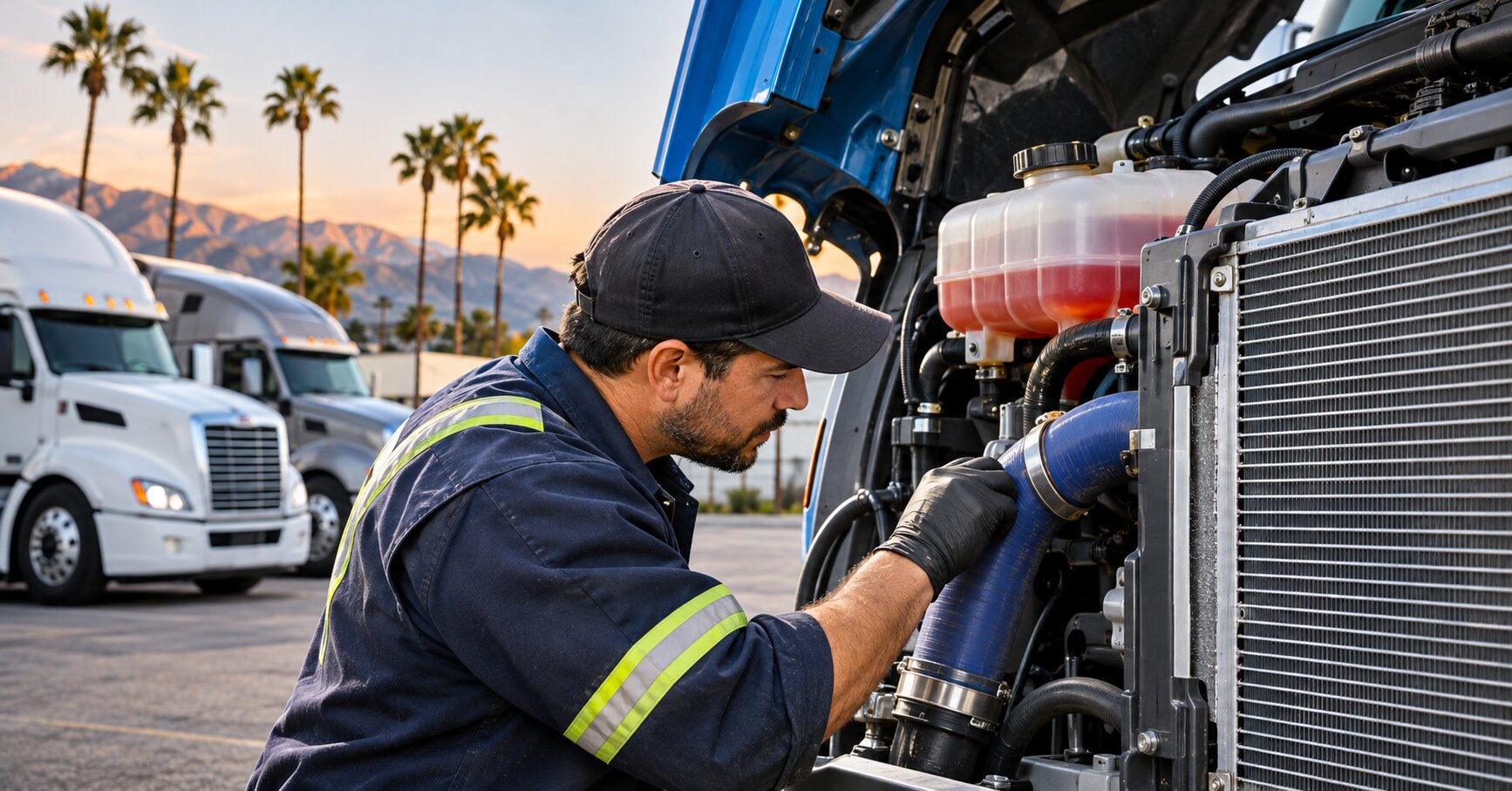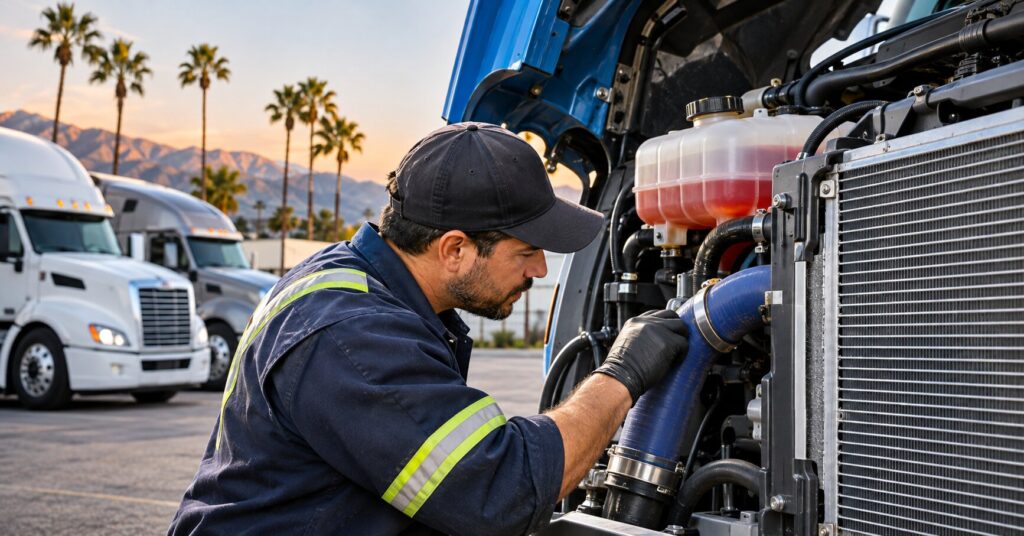
For commercial trucking businesses, every mile matters. Whether a company operates five trucks or manages a nationwide fleet, vehicle reliability directly influences delivery schedules, operating expenses, customer satisfaction, and profitability.
While tires, brakes, and oil changes often receive considerable attention, the engine cooling system deserves an equally important place in a fleet’s preventive maintenance program.
A deteriorating coolant hose, malfunctioning fan clutch, or damaged radiator can turn a profitable freight assignment into an expensive roadside breakdown.
By maintaining cooling systems and investing in compatible aftermarket semi truck parts, trucking businesses can reduce avoidable downtime, protect valuable equipment, and better manage long-term operating costs.
1. Why the Cooling System Is Essential to Commercial Truck Performance
Heavy-duty diesel engines generate significant heat, particularly when transporting heavy loads, climbing steep grades, or operating for extended periods.
The cooling system helps maintain an appropriate engine operating temperature by transferring excess heat away from critical engine components.
A typical semi truck engine cooling system includes:
- Radiator
- Cooling fan and fan clutch
- Water pump
- Thermostat
- Coolant reservoir or expansion tank
- Coolant hoses and clamps
- Temperature sensors
- Engine coolant
The charge air cooler is another important heat-management component, although it operates within the engine’s intake air system rather than the conventional coolant circuit.
When these systems function correctly, they help support consistent engine performance under demanding operating conditions.
However, when a component begins to deteriorate, the entire vehicle may become less reliable.
2. The Financial Consequences of Cooling System Failure
For a commercial trucking business, the cost of an overheating truck extends beyond the price of replacement parts.
An unexpected cooling system failure can create several additional expenses that affect profitability.
Lost Freight Revenue
A truck that is unavailable for service cannot complete scheduled freight assignments.
Consider a hypothetical trucking company facing a cooling system breakdown that results in the following expenses:
| Expense | Estimated cost |
| Missed gross freight revenue over two days | $2,400 |
| Emergency towing | $600 |
| Replacement components | $450 |
| Repair labor | $750 |
| Additional administrative expenses | $150 |
| Total potential financial impact | $4,350 |
These figures are illustrative rather than industry averages. Actual costs vary according to the vehicle, location, repair requirements, and freight contract. Missed gross revenue should also not be confused with lost profit.
Nevertheless, the example demonstrates how a relatively manageable mechanical issue can create a much larger financial disruption.
Expensive Engine Repairs
Continuing to operate an overheating engine can contribute to serious damage, including cylinder head distortion, head gasket failure, and damage to other internal engine components.
Identifying cooling system problems early may help prevent a repair involving an individual component from developing into a major engine repair.
Customer Satisfaction and Contract Reliability
Commercial trucking companies depend on their ability to meet delivery commitments.
Repeated vehicle breakdowns can affect customer confidence, particularly when businesses depend on time-sensitive shipments.
Reliable equipment is therefore not simply a maintenance concern. It is also an important part of maintaining strong customer relationships.
3. Cooling System Components Fleet Managers Should Prioritize
Understanding the purpose of individual cooling system components can help fleet managers make better maintenance and purchasing decisions.
Radiators
The radiator transfers heat from circulating engine coolant to the surrounding air.
Dirt, road debris, damaged fins, corrosion, and coolant leaks can reduce its effectiveness.
Fleet maintenance teams should monitor radiator condition and ensure airflow through the cooling assembly remains unobstructed.
Fan Clutches and Fan Blades
The fan clutch controls cooling fan engagement based on the vehicle’s operating requirements and system design.
A malfunctioning fan clutch may prevent the fan from providing sufficient airflow when additional cooling is needed. A fan that remains engaged unnecessarily can also consume additional engine power.
Businesses operating older Volvo trucks can explore compatible Volvo VNL fan clutch replacements for applicable vehicle configurations.
Coolant Expansion Tanks
Coolant expansion tanks accommodate changes in coolant volume as the engine heats up and cools down.
Cracks, deteriorated connections, and damaged pressure caps can contribute to coolant loss or other cooling system problems.
Fleet operators sourcing Freightliner Cascadia coolant tanks should verify mounting points, connection locations, sensor requirements, and vehicle compatibility before purchasing.
Thermostats and Water Pumps
The thermostat regulates coolant flow according to engine temperature, while the water pump circulates coolant throughout the system.
Problems with either component can interfere with effective temperature regulation.
Because several cooling system failures produce similar symptoms, accurate diagnosis is important before ordering replacement parts.
For a more detailed explanation, read this guide comparing the fan clutch, radiator, and thermostat as causes of semi truck overheating.
4. Why Charge Air Cooler Hoses Should Not Be Overlooked
The charge air system plays an important role in the performance of turbocharged diesel engines.
A turbocharger compresses incoming air before it enters the engine. Because compression increases air temperature, the charge air cooler reduces that temperature before the air reaches the intake manifold.
A charge air cooler hose connects sections of this pressurized air system.
Over time, exposure to heat, pressure, vibration, and repeated operating cycles can contribute to hose deterioration.
Potential Signs of Charge Air System Problems
- Reduced engine power
- Unusual hissing or whistling sounds under acceleration
- Lower-than-expected boost pressure
- Visible cracks or deterioration in hoses
- Loose or damaged connections
- Unexplained changes in fuel consumption
These symptoms are not exclusive to charge air system leaks, so maintenance teams should investigate the underlying cause.
Unlike a conventional coolant hose failure, a charge air cooler hose leak primarily affects intake air delivery and engine performance rather than directly causing coolant loss.
Fleet managers comparing replacement truck hoses should confirm the required dimensions, connection design, material specifications, and engine compatibility.
Including charge air system inspections in scheduled maintenance can help identify performance problems before they interfere with freight operations.
5. Cooling System Maintenance Matters Throughout the Year
Many trucking businesses associate engine overheating with summer driving.
However, commercial trucks place demands on their cooling systems throughout the year, regardless of outdoor temperatures.
Heavy loads, steep grades, extended idling, stop-and-go traffic, and long-distance hauling can all affect engine operating conditions.
Southern California Freight Operations
Trucking companies operating throughout Orange County, Los Angeles County, and the Inland Empire may encounter congested highways, busy distribution centers, and significant elevation changes.
Routes through the Grapevine and Cajon Pass can place additional demands on heavy-duty engines, especially when trucks are fully loaded.
Winter and Holiday Freight Operations
Cooler weather does not eliminate the possibility of cooling system problems.
Commercial trucks may experience changing temperatures, increased seasonal mileage, and demanding delivery schedules.
Businesses preparing for year-end transportation demands can also benefit from this guide on preparing semi trucks for the holiday freight season.
A year-round maintenance approach helps businesses identify problems according to vehicle condition rather than relying solely on seasonal inspections.
6. How Cooling System Condition Can Influence Fuel Efficiency
Fuel represents a significant operating expense for commercial trucking businesses.
Although fuel consumption is influenced by many factors, engine temperature management and charge air system performance can contribute to overall operating efficiency.
For example:
- A cooling fan that operates unnecessarily can increase engine load.
- A malfunctioning thermostat can interfere with normal operating temperatures.
- Charge air system leaks can reduce engine performance and affect fuel consumption.
- Cooling system problems may cause engine protection systems to limit available power.
These conditions do not affect every vehicle in the same way.
Fleet managers should evaluate fuel consumption trends alongside diagnostic information, vehicle mileage, load weights, driving conditions, and maintenance records.
Investigating unexpected changes in fuel efficiency may help identify underlying mechanical problems that would otherwise go unnoticed.
7. How to Recognize Cooling System Problems Before a Breakdown
Drivers are often the first people to notice changes in vehicle performance.
Encouraging drivers to report developing problems can help maintenance teams address issues before they become more expensive.
| Warning sign | Potential underlying issue |
| Engine temperature rising under load | Restricted cooling, fan malfunction, or coolant circulation problems |
| Frequent coolant top-offs | External or internal coolant leak |
| Visible coolant residue | Leaking hose, radiator, reservoir, or connection |
| Cooling fan running excessively | High cooling demand or a fan control problem |
| Reduced engine power | Engine protection response or charge air system problem |
| Damaged or swollen hoses | Material deterioration or other system problems |
| Repeated temperature warning | Cooling system or sensor malfunction |
These warning signs should prompt further inspection rather than automatic replacement of a particular component.
If an engine displays a serious overheating warning, drivers should stop safely and follow the manufacturer’s shutdown procedures.
Never open a pressurized cooling system while the engine is hot.
8. Create a Cooling System Maintenance Program for Your Fleet
A structured maintenance program helps commercial trucking businesses move away from reactive repairs and toward more predictable vehicle management.
Establish Vehicle-Specific Maintenance Schedules
Different truck models, engines, coolant formulations, and operating conditions may require different service intervals.
Fleet managers should follow manufacturer recommendations while accounting for mileage, engine hours, vehicle age, and operating demands.
Monitor Coolant Condition
Engine coolant does more than transfer heat. The correct formulation also helps protect against corrosion, freezing, boiling, and certain types of internal engine damage.
As explained in the Volvo Trucks cooling system guidance, proper coolant selection and regular maintenance are important for protecting engine components.
Maintenance teams should document coolant specifications and avoid mixing incompatible formulations.
Maintain Detailed Service Records
Useful cooling system maintenance records include:
- Vehicle identification number
- Engine model and configuration
- Coolant type and service date
- Mileage and engine hours
- Previously replaced components
- Diagnostic findings
- Repair costs
- Recurring temperature-related problems
These records can help businesses identify patterns and make better replacement-part purchasing decisions.
Train Drivers to Report Problems Early
Drivers should understand the importance of reporting temperature warnings, unusual fan behavior, visible leaks, and unexpected performance changes.
Early communication gives maintenance teams more opportunities to schedule inspections before a vehicle becomes unavailable.
9. Track Cooling System Maintenance as a Business Performance Metric
Commercial trucking businesses can benefit from evaluating maintenance performance using measurable indicators.
Rather than simply recording repair expenses, fleet managers can monitor how maintenance affects vehicle availability and operating costs.
| Performance metric | What it helps measure |
| Cooling-related breakdowns | Frequency of unexpected failures |
| Unscheduled downtime hours | Operational disruption |
| Cooling system repair cost per mile | Maintenance spending relative to vehicle usage |
| Repeat repairs | Effectiveness of diagnosis and replacement components |
| Emergency parts orders | Purchasing and inventory planning efficiency |
| Preventive maintenance completion rate | Adherence to scheduled servicing |
Reviewing these indicators over time can help businesses identify vehicles requiring additional attention.
For example, if one truck repeatedly experiences coolant loss while comparable vehicles do not, maintenance records may reveal a recurring issue that deserves further investigation.
These findings can also support more realistic maintenance budgets. For additional guidance, explore our article explaining why businesses need budgets.
10. Choosing Quality Aftermarket Semi Truck Parts
Commercial trucking businesses must balance maintenance spending with vehicle reliability.
Quality aftermarket semi truck parts can provide practical replacement options when they meet the vehicle’s specifications and operating requirements.
However, choosing parts based solely on purchase price may create additional expenses if compatibility, durability, or installation requirements are overlooked.
Before purchasing cooling-related replacement components, fleet managers should evaluate:
- Vehicle make, model, and production year
- Engine manufacturer and configuration
- Original equipment part numbers
- Material and performance specifications
- Mounting and connection requirements
- Warranty coverage
- Supplier availability and fulfillment options
For businesses maintaining multiple truck models, creating approved replacement-part records can improve purchasing consistency.
Our previous article on how fleet managers can reduce parts costs without buying cheap parts explores how businesses can balance purchasing expenses with long-term reliability.
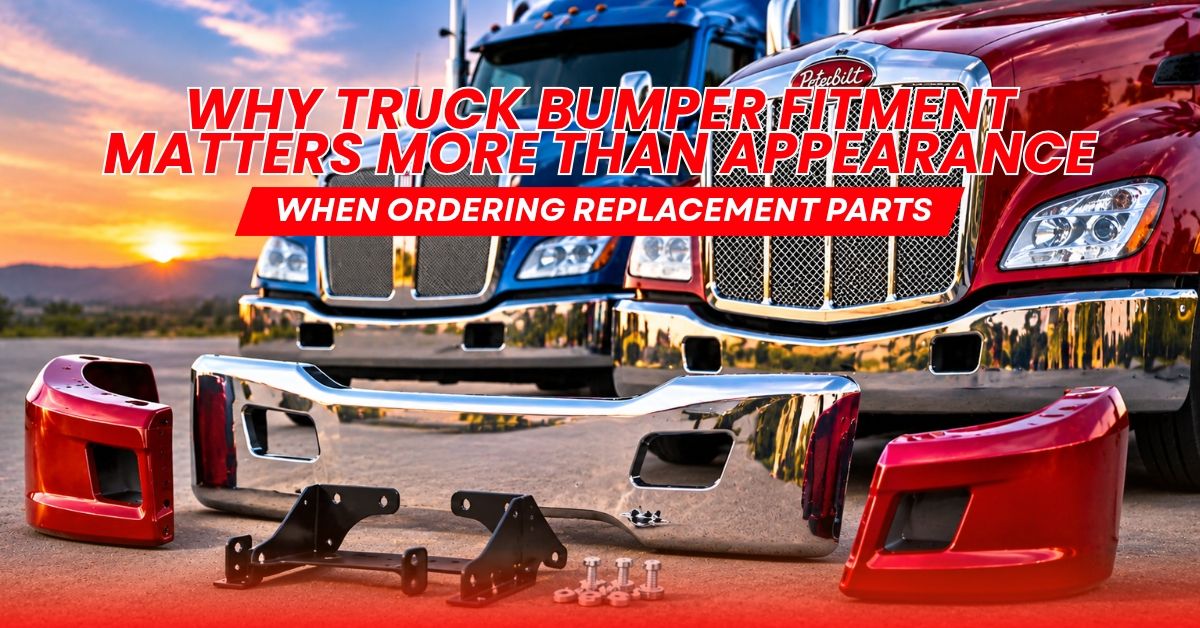
The importance of accurate compatibility also extends beyond cooling components. As discussed in our guide to why truck bumper fitment matters when ordering replacement parts, selecting the correct component can prevent unnecessary labor, returns, and downtime.
11. Cooling System Considerations for Volvo VNL and Freightliner Cascadia Fleets
Volvo VNL and Freightliner Cascadia trucks are widely used in commercial freight operations.
Although both platforms require reliable temperature management, their cooling configurations can vary according to production year, engine type, and equipment specifications.
Volvo VNL Cooling System Considerations
Maintenance teams should review the condition of radiators, fan assemblies, coolant tanks, hoses, and related connections.
When purchasing Volvo truck parts, verify the specific VNL generation and engine configuration rather than assuming components are interchangeable between model years.
Freightliner Cascadia Cooling System Considerations
Freightliner Cascadia trucks may also use different cooling system components depending on their engine platform and production generation.
Fleet operators comparing Freightliner Cascadia parts should confirm radiator dimensions, coolant tank configurations, fan assembly specifications, and other relevant fitment details.
Standardizing maintenance procedures across a fleet can be beneficial, but replacement-part decisions must remain vehicle-specific.
12. Why Reliable Parts Suppliers Matter to Southern California Trucking Businesses
When a commercial truck requires repairs, replacement-part availability can influence how quickly the vehicle returns to service.
Businesses searching for a semi truck parts store near them should evaluate more than geographic proximity.
A dependable supplier should provide useful product information, clear compatibility details, and practical fulfillment options.
For businesses sourcing semi truck parts in Orange County, Los Angeles, and the Inland Empire, QSC Truck Parts supplies aftermarket semi truck parts throughout Southern California from its warehouse in Ontario, California.
Local pickup options can be particularly useful when compatible components are available and repairs are time-sensitive.
Businesses should confirm inventory, compatibility, and pickup arrangements before scheduling repairs.
Establishing supplier relationships before a breakdown occurs can help maintenance teams make purchasing decisions more efficiently when unexpected problems arise.
Frequently Asked Questions
Why is cooling system maintenance important for commercial trucking businesses?
Cooling system maintenance helps maintain appropriate engine temperatures, reduce avoidable breakdowns, protect engine components, and support more predictable operating expenses.
What are the most important cooling system parts on a semi truck?
Important components include the radiator, cooling fan, fan clutch, water pump, thermostat, coolant reservoir, coolant hoses, and engine coolant. The charge air system also contributes to engine performance and heat management.
Can a bad fan clutch increase fuel consumption?
A fan clutch that remains engaged unnecessarily can consume additional engine power and potentially increase fuel consumption. A clutch that fails to engage when required can contribute to overheating.
Is a charge air cooler hose the same as a coolant hose?
No. A charge air cooler hose carries pressurized intake air, while a coolant hose carries engine coolant. Both are important but serve different functions.
How often should commercial truck cooling systems be serviced?
Service intervals depend on the manufacturer’s recommendations, engine configuration, coolant formulation, mileage, engine hours, and operating conditions. Regular visual inspections should complement scheduled maintenance.
Are aftermarket cooling system parts suitable for commercial trucks?
Compatible aftermarket components can provide practical replacement options when they meet the required fitment, material, and performance specifications.
Where can Southern California trucking businesses purchase replacement semi truck parts?
QSC Truck Parts supplies aftermarket replacement components for commercial vehicles from its Ontario, California warehouse, serving customers across Southern California and offering shipping throughout the continental United States.
Final Thoughts: Cooling System Maintenance Is an Investment in Business Reliability
Commercial trucking businesses depend on equipment that can perform consistently under demanding operating conditions.
A well-maintained cooling system helps protect engines, support vehicle availability, and reduce the likelihood of avoidable mechanical disruptions.
By monitoring cooling system performance, maintaining accurate service records, addressing developing problems early, and sourcing compatible replacement components, fleet managers can build a more predictable maintenance strategy.
Whether a business operates Volvo VNL trucks, Freightliner Cascadia vehicles, or a mixed commercial fleet, preventive maintenance should be viewed as an investment in operational reliability rather than simply another expense.
Ultimately, keeping trucks running reliably helps businesses protect their revenue, maintain customer relationships, and remain competitive in the commercial transportation industry.